


Why Your PMAX Campaign Isn’t Driving Q4 Revenue (and What to Fix Now)
Learn why PMAX underperforms in Q4 and how to restructure campaigns with exclusions, segmentation, and weighted conversion tracking.

Shopify remains the platform of choice for thousands of eCommerce brands, from small businesses to enterprise retailers. But as the platform evolves, success depends less on what Shopify provides out of the box and more on the apps you select to build your tech stack.
In 2026, the best-performing eCommerce brands won’t be the ones that install the most apps. They’ll be the ones that install the right apps — those that balance performance, customer experience, and profitability. Too many apps slow down site speed, add unnecessary complexity, and drive up costs. The smartest brands will adopt lean, purpose-built stacks that directly support revenue growth.
Based on our work with 7- and 8-figure brands, here are the 10 Shopify apps every growth-minded retailer should consider in 2026.
Personalization has become table stakes for eCommerce. Rebuy allows brands to deliver AI-powered product recommendations, cross-sells, and upsells across the site and in cart. The key is that recommendations aren’t random — they’re tailored based on browsing and purchase behavior. For 8-figure brands, that kind of personalization drives higher average order values and improves customer experience without manual merchandising.
Klaviyo remains the gold standard for email and SMS automation. While Shopify Email is sufficient for beginners, scaling brands need Klaviyo’s segmentation, automation, and reporting capabilities. With Klaviyo, brands can trigger post-purchase flows, win-back campaigns, and loyalty reminders, ensuring that customers acquired in Q4 become repeat buyers in Q1 and beyond.
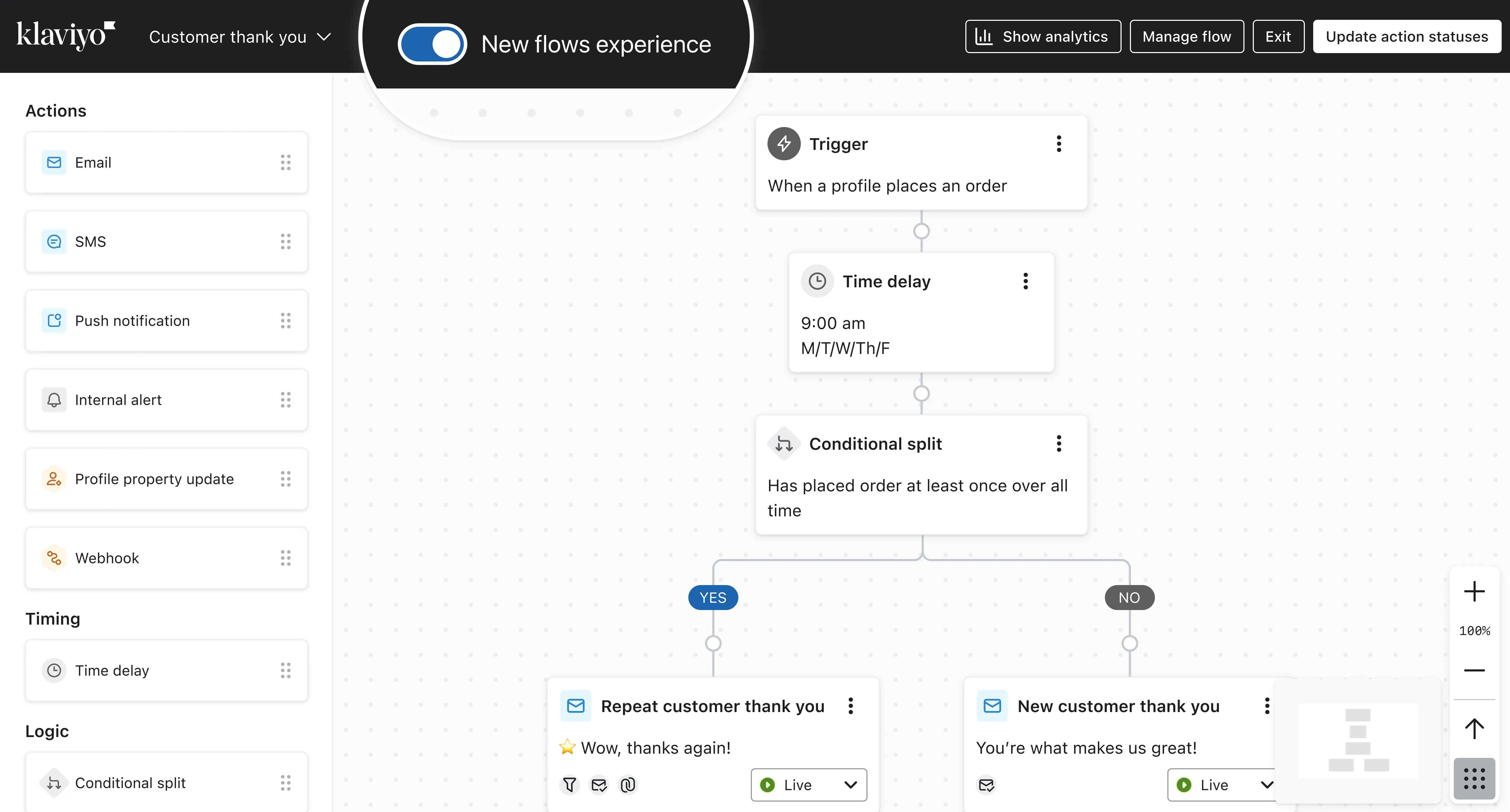
Shopify’s themes are flexible, but not flexible enough for brands running complex campaigns. Replo gives marketers the power to build custom landing pages and PDPs without waiting on development. For brands running constant promotions, A/B tests, or influencer campaigns, this app enables agility and Conversion Rate Optimization improvements at scale. Now with added AI functionality, pages can be created and edited without developer-level knowledge along with a whole template library to help your brand put its best foot forward.
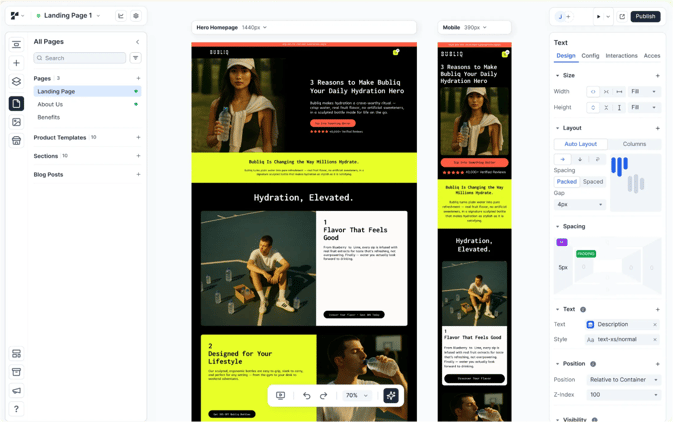
Social proof remains one of the most powerful conversion drivers. Yotpo consolidates product reviews, photo reviews, loyalty programs, and referral systems into one app. By combining these functions, Yotpo not only boosts conversion rates but also keeps tech stacks leaner and sites faster. For 2026, brands that streamline apps will see fewer performance issues. Main widgets can easily be created and displayed on Product Page templates and boost your entire store's credibility and conversion rate.
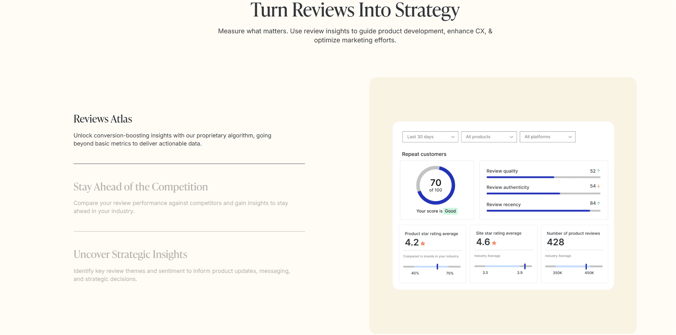
Customers expect quick responses across multiple channels. Gorgias provides a centralized helpdesk that integrates email, live chat, and social DMs. By consolidating customer communication, brands reduce response times and improve satisfaction. In a competitive market where switching costs for customers are low, seamless support can mean the difference between a one-time buyer and a loyal fan.
While Klaviyo includes SMS, Postscript remains a powerful choice for brands that want more sophisticated segmentation and automation. SMS continues to outperform email for open and click-through rates, especially during promotions. Postscript allows brands to build flows around cart abandonment, shipping updates, and exclusive deals, all tailored to customer behavior.
One of the biggest challenges in eCommerce is understanding where revenue actually comes from. With rising ad costs and platform tracking limitations, attribution is messy. Triple Whale gives brands real-time dashboards that consolidate spend across channels and tie it back to revenue. For 2026, where proving ROI to leadership will be non-negotiable, this app helps CMOs and marketing directors make smarter investment decisions. Now with their new AI Agents, Moby, decision making and analytics has never been easier.
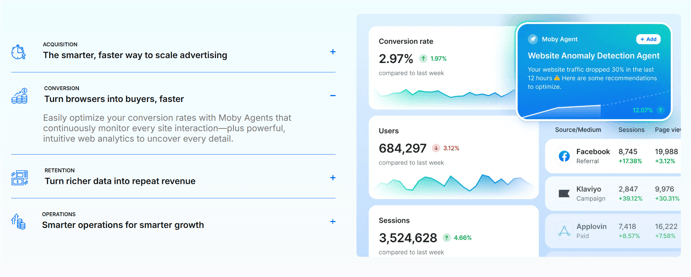
As brands scale, operational inefficiencies eat into margins. Shopify Flow automates repetitive tasks such as tagging customers, updating inventory, or adjusting loyalty tiers. While it may not drive revenue directly, Flow saves time and reduces errors, allowing teams to focus on growth initiatives instead of manual work.
Stamped is a strong alternative to Yotpo for brands that want review collection without the full loyalty suite. It’s lightweight, SEO-friendly, and provides flexibility for smaller or mid-sized brands. In 2026, retailers looking to simplify stacks may opt for Stamped when loyalty programs are handled elsewhere. It's also a Google Shopping Review Partner which lets you syndicate reviews listed on the SERP for Paid & Organic Shopping - making it a valuable additin to your brand's tech stack.

LoyaltyLion is purpose-built for advanced loyalty and referral programs. With gamification, tiered rewards, and integrations into Klaviyo or Gorgias, it gives brands the ability to deepen customer relationships. In 2026, where customer retention will be more valuable than acquisition, loyalty platforms like this will be key to sustaining growth.
The goal for 2026 is not to install every app that looks interesting. It’s to build a lean stack that supports four essential functions: personalization, lifecycle marketing, attribution, and retention. Apps should integrate cleanly, avoid redundancy, and prioritize site performance. Brands should also commit to quarterly audits to evaluate whether each app is delivering ROI.
The difference between a 7-figure brand and an 8-figure brand often isn’t the number of apps. It’s how strategically those apps are deployed to support revenue and customer experience.
At (un)Common Logic, we help brands evaluate, streamline, and optimize their Shopify & e-commerce tech stacks. Contact us to see how we combine technical performance with growth strategy.
Most high-performing brands use fewer than 15 apps. More than that often creates redundancy and site speed issues.
It depends on your goals. For retention, Klaviyo or LoyaltyLion. For efficiency, Triple Whale or Shopify Flow.
Yes. Excess apps slow down page speed, which negatively impacts Core Web Vitals and search rankings.
Consolidation reduces redundancy, but some brands prefer separate tools for greater flexibility.

Learn why PMAX underperforms in Q4 and how to restructure campaigns with exclusions, segmentation, and weighted conversion tracking.
Learn advanced CRO tactics like personalization, urgency, and offer framing to turn Q4 traffic into profitable revenue.
Learn why polished SaaS landing pages still underperform—and how conversion-first design, CRO strategy, and data-driven testing can turn clicks into...
